TifAni’s cross-country practice shorts
Luckiest Girl AliveTifAni’s cross-country practice shorts are an ordinary item of athletic clothing that becomes conspicuous when classmates display them at school. Their exposure links a private bodily circumstance to public ridicule, and the humiliation is severe enough to send TifAni away from school for the day. Arthur later returns the shorts, making the object part of a quieter encounter in which he allows her to cry. Across these moments, the shorts shift from practical clothing to evidence of how quickly other people can turn an involuntary detail into a social judgment.
The Object and Its Exposure
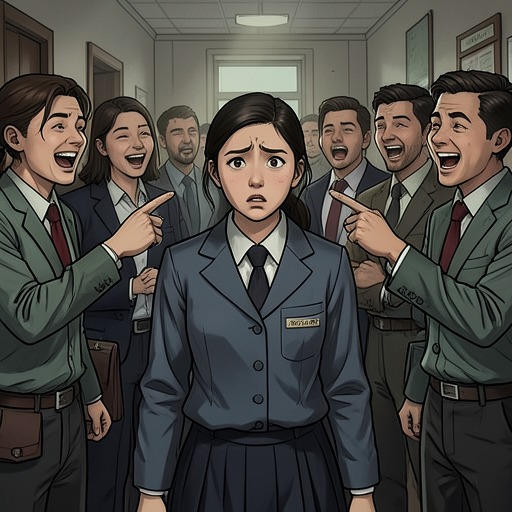
TifAni had worn the shorts for practice the previous day. After changing, she did not notice they were missing when she packed her bag. The next day, she finds them tacked to a bulletin board in the school lounge beneath a handwritten message that ridicules her. The display makes the clothing visible to a crowd and transforms a private item into a public spectacle; the harm lies not only in the message but in the deliberate staging of the shorts for others to see.
The wording of the sign presents its cruelty as a joke, but the scene gives TifAni no reason to experience it as harmless. A freshman who had previously snubbed her laughs, and TifAni recognizes the crowd as having gathered around the display. She also recalls that Hilary and Olivia had acted unusually kind in the locker room the day before. The apparent friendliness thus acquires a threatening context: TifAni connects it with the missing shorts and the public prank, although the passage does not establish who placed them on the board.
What the Shorts Reveal
The shorts carry a circumstance their audience cannot see from the display alone. TifAni had started her period the day before and had felt relieved because it meant the Morning-after pill had worked. After running, the shorts were stained, and she understands that classmates may interpret their appearance as proof of dirtiness rather than as a consequence of an ordinary bodily process. The difference between what happened and the judgment imposed on her is central to the episode: the clothing is made to stand in for a moral accusation that the facts do not support.
The object therefore exposes more than TifAni’s embarrassment. It shows how her peers apply a gendered double standard: in the bathroom, she overhears girls contrasting her treatment with that of Ben, whose sexuality they discuss as something he cannot help. Their conversation makes the surrounding social rule explicit without making the shorts themselves responsible for it. The clothing has become the prop through which others express that rule, while TifAni bears the consequences of their choice to shame her.
Leaving School and Arthur’s Return
TifAni waits in a bathroom stall until the first-period bell has stopped ringing, then gives the halls time to clear before leaving through the back entrance. She has never skipped school before, and the account contrasts her usual obedience with the force of this humiliation: on that day, avoiding the rules matters less to her than getting away from the scene. Her departure is a direct consequence of the public display, not a planned act of rebellion.
Later, at Arthur’s house, he takes the shorts from his backpack and tosses them to her while they are in the kitchen. TifAni smooths them across her lap and asks how he got them; Arthur dismisses the question rather than explaining. The passage establishes that he has them and returns them, but not how he recovered them or who put them on the bulletin board. Those limits matter: his gesture offers practical care without resolving the event’s unanswered questions.
While Arthur turns to check the food he is heating, TifAni smells the shorts herself, apparently needing to know what others might have noticed. She then puts them away and cries silently. Arthur sits across from her and lets her cry before saying he will show her something that will make her feel better. The clothing is no longer displayed before a crowd, but it still carries the memory of that exposure. In this private setting, Arthur does not mock her or demand an explanation; his presence makes room for the emotion that the public scene had forced her to conceal.
Narrative Significance
The shorts connect a small, material mishap to a larger pattern of social labeling in TifAni’s life. In the school lounge, they are taken out of her control and made to tell a degrading story about her. In the kitchen, returned to her hands, they prompt her own inspection and tears. That movement from public display to private possession marks a change in audience, not an erasure of the humiliation: she remains affected, but the response is no longer being staged for classmates.
The episode also gives the object a distinct place in TifAni’s recollection of adolescence. The narrative supplies practical details—the missed item in her bag, the bulletin board, the bathroom stall, and Arthur’s backpack—so the injury is rooted in a sequence of ordinary actions rather than in an abstract account of cruelty. Later, TifAni describes her public identity as carefully managed and imagines the documentary camera clarifying who she is. The shorts do not themselves explain that later self-presentation, but this earlier scene offers a concrete counterpoint: here, other people attempt to define her through an exposed object, while her own account restores the circumstances they disregard. Their significance lies in that tension between being made into a spectacle and reclaiming the meaning of what happened.